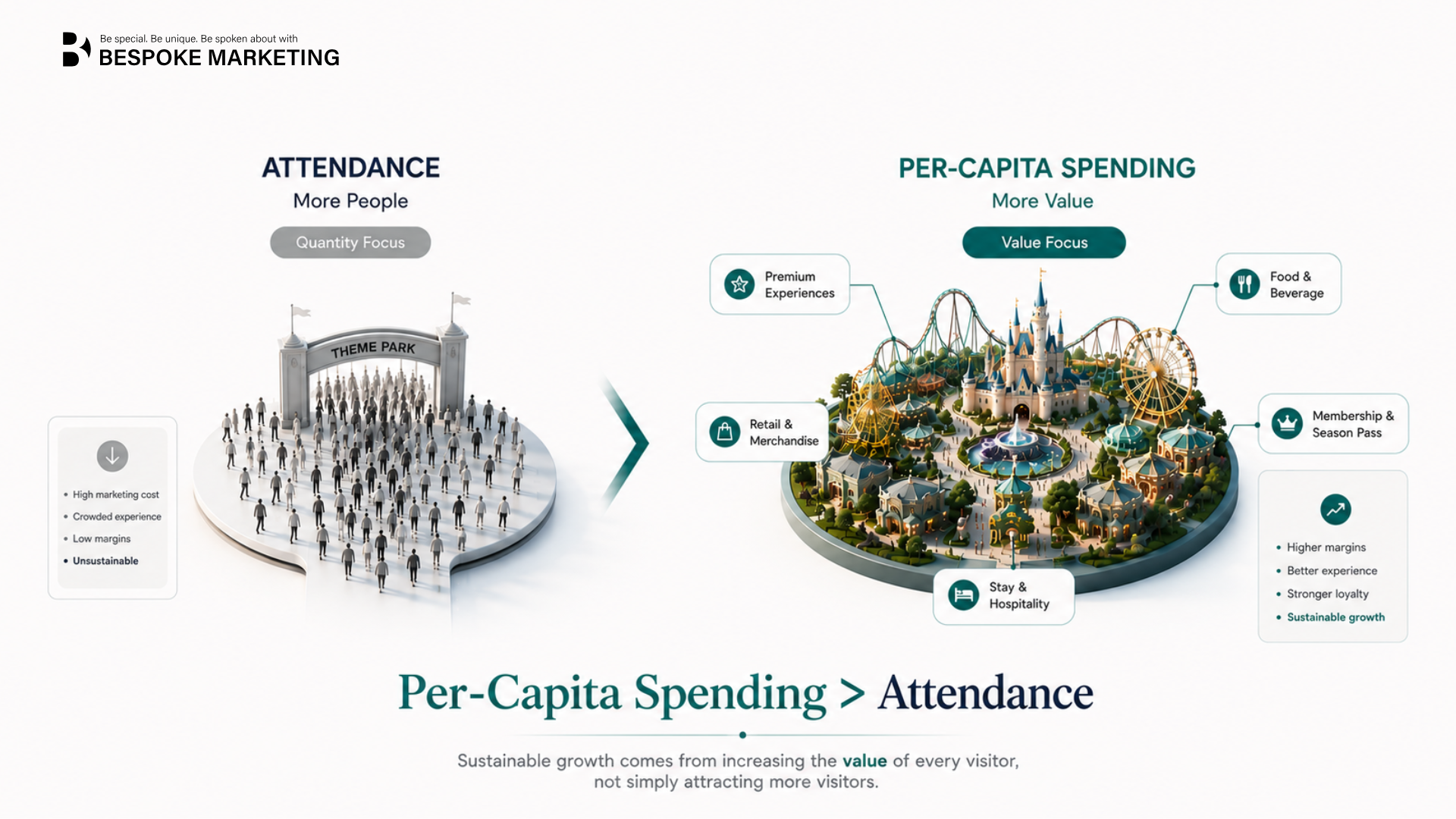
Electric vehicles now set the pace of Vietnam’s car market. Demand is no longer the open question. For every brand outside the market leader, the question is trust, and it is answered in reviews and owner communities, not in advertising.
Vietnam sold 388,000 cars from January to July 2026, a record pace and 28.6% above the prior year. Roughly four in ten of those cars came from a single EV-only brand. Three years ago, that sentence would have been unthinkable.
The shift changes what it takes to win. Price and product still matter, but a growing share of the purchase decision is made before the buyer ever reaches a showroom.
View the full report: Vietnam EV Car Market 2026 (deck)
The market at a glance
| Metric | Value |
|---|---|
| Car sales, Jan to Jul 2026 | 388,000 units, +28.6% YoY |
| Leading EV brand’s share of car sales, H1 2026 | ~40% |
| EV sales, 2025 | 177,000 units, 3.6x 2024 |
| Vietnam’s rank in Southeast Asia for BEV sales, Q1 2026 | #2 |
| EV market size forecast, 2031 | USD 8.8 billion |
1. Demand is proven: EVs have moved into the mass market
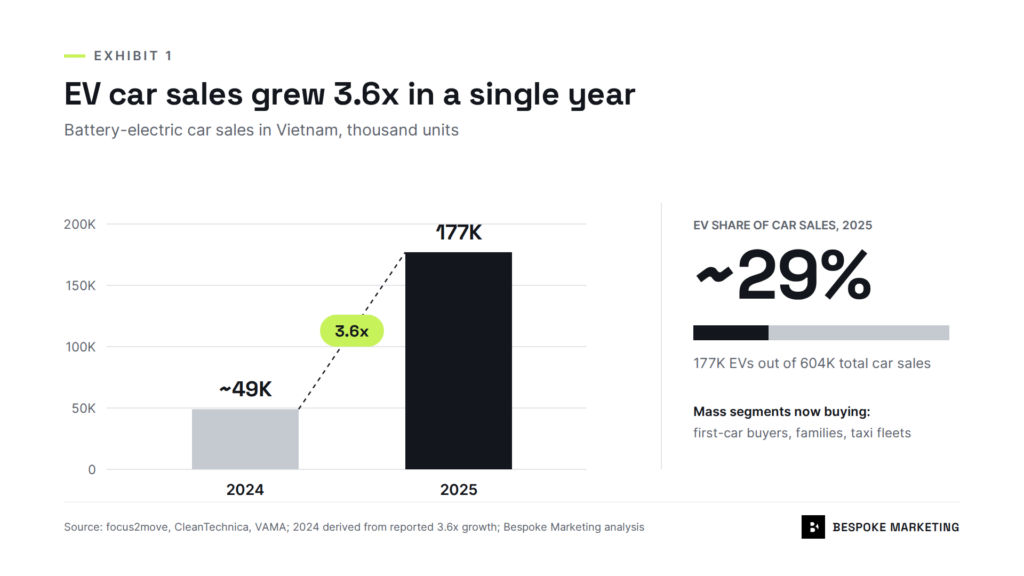
Vietnam sold 177,000 electric cars in 2025, 3.6 times the 2024 level. Total car sales reached 604,000 units the same year. In 2026 the pace has not slowed: the market leader delivered 21,800 vehicles in July alone, up 21% month on month.
More important than the volume is who is buying. EV demand has moved beyond early adopters into three mass segments: young urban buyers purchasing a first car, families upgrading to an urban SUV, and taxi and ride-hailing fleets optimizing for running cost.
When a category reaches these buyers, the rules change. Early adopters buy on enthusiasm. Mass buyers buy on reassurance.
2. One EV-only brand now sells about four in ten cars
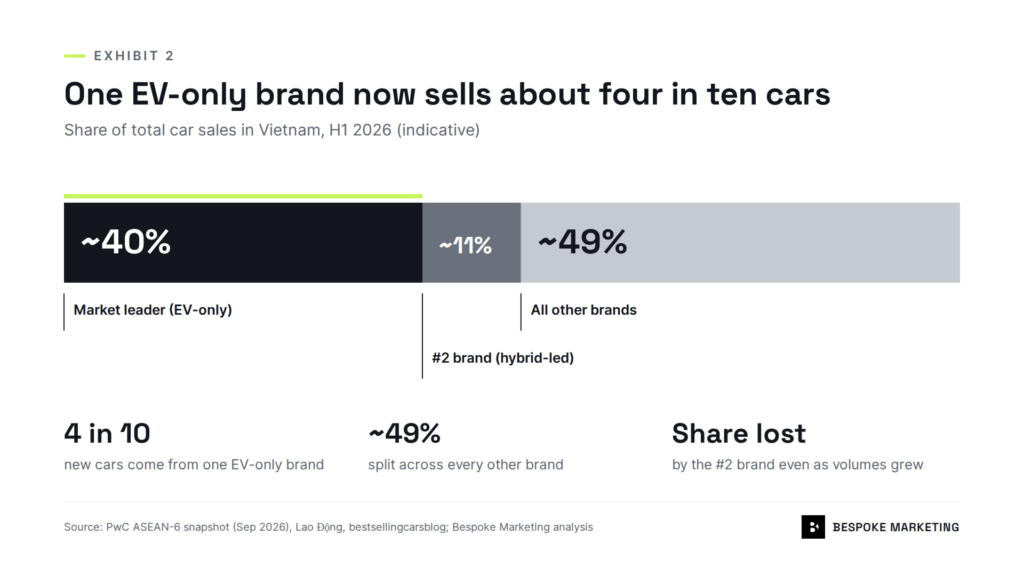
The market leader took roughly 40% of all car sales in H1 2026. The number two brand, a long-established Japanese marque, holds about 11% and lost share even as total volumes grew.
This concentration cuts both ways. It proves that Vietnamese buyers will commit to an electric car at scale. It also means every other EV brand is competing against a default choice. Challengers do not need to convince buyers that EVs work. They need to convince buyers that their EV is a safe alternative to the default.
3. Four forces make the EV the rational choice
| Driver | What it does |
|---|---|
| Tax | Special consumption tax on battery EVs held at 3%, versus 15% for comparable combustion cars, through 2030 |
| Registration | First-registration fee waiver for battery EVs extended through 2030 |
| Running cost | Preferential charging tariff of about VND 2,204/kWh; fuel price swings push buyers to recalculate |
| Access | Entry EVs from about VND 302 million bring city-car buyers and fleets into the category |
With policy support now locked in through 2030, the cost case for EVs is stable for the rest of the decade. That removes urgency as a sales lever, and puts the weight on confidence instead.
4. The urban SUV is the volume battleground
EV demand clusters into four segments, each with a different deciding factor. In the urban SUV segment, two models from the market leader took 47% of sales in H1 2026.
| Segment | Buyer | What decides the purchase |
|---|---|---|
| Mini city car | Young urban first-car buyers | Price and parking |
| Urban SUV | Families upgrading | Space, range and resale value |
| Mid and premium | Image- and tech-led buyers | Reviews and test drives |
| Fleet and service | Taxi and ride-hailing operators | Running cost |
The competitive posture follows from this map. The leader is defending a full lineup backed by a national dealer network. Challengers are attacking with price-led models under VND 500 million and fast dealer expansion. Hybrid-led incumbents are adapting as EVs take share. In the two largest segments, the deciding factors are the ones buyers cannot verify from a spec sheet: range in daily use, resale value, and the reliability of service.
5. The purchase is decided at the validate stage
Car buyers research for weeks, and most of the decision now happens in reviews and owner communities. At each stage, the buyer asks a different question, and a different source answers it.
| Stage | Buyer question | What answers it |
|---|---|---|
| Trigger | Fuel costs, a new family need: is it time? | Cost-per-km explainers |
| Research | Which EV fits my budget, family and commute? | Long-form auto reviews |
| Validate | Real range? Charging in my apartment? Resale value? | Owner diaries and community Q&A |
| Test drive | How does it drive? Is the dealer and service network reliable? | Creator test-drive content, showroom livestreams |
| Purchase | Best price, financing, delivery time? | Livestream offers, owner referrals |
The validate stage is where purchases stall. Apartment charging, battery life and resale value are the three doubts that hold buyers back, and none of them is resolved by advertising. They are resolved by people the buyer trusts: owners who have lived with the car, and reviewers with no reason to oversell it.
6. Outlook: a USD 8.8 billion market by 2031
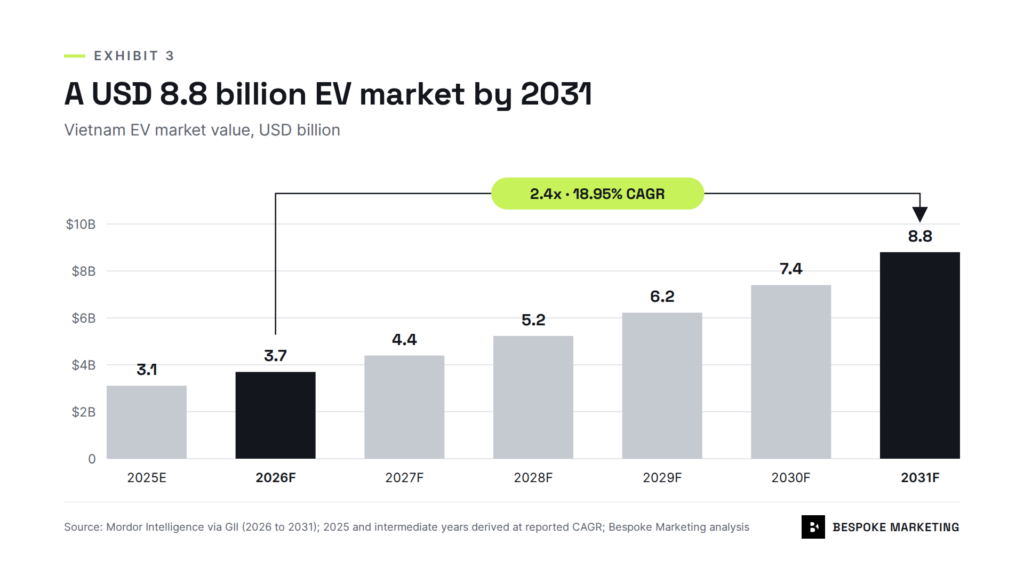
Vietnam’s EV market is forecast to grow 2.4 times to USD 8.8 billion by 2031, an 18.95% annual growth rate.
- Upside: the market leader targets 500,000 vehicles by 2027 and one million a year by 2030, while challengers localize production and expand dealers.
- Watch: charging access in apartment buildings and secondary cities, and the resale values of early EVs as they reach the used market.
Both watch points are trust questions. The brands that answer them credibly, and publicly, will take a disproportionate share of the next wave of buyers.
Four moves for EV brands competing for the next wave
- Win the validate stage. Put real owners in front of buyers: range tests in daily traffic, apartment charging routines, 12-month ownership diaries. Proof from owners outperforms claims from brands.
- Own the community. Be present in auto, EV-owner and local groups before buyers search for you. The brand that answers questions first shapes the shortlist.
- Make test drives social. Turn every test drive and showroom day into creator content and livestreams. A test drive seen by thousands is worth more than one taken by a single buyer.
- Make the cost math simple. Translate tax, registration and charging savings into one clear cost-of-ownership number per model. With incentives stable through 2030, clarity sells better than urgency.
About this insight
This article draws on Vietnam EV Car Market 2026, a market overview by BSM Network Insights, the research arm of Bespoke Marketing. BSM builds KOC, social seeding and go-to-market programs for EV brands in Vietnam.
View the full deck on LinkedIn. To discuss your EV brand’s next stage of growth, visit bespokemarketing.asia or write to Partners@bespokemarketing.asia.
Sources
VAMA; Lao Động; PwC ASEAN-6 snapshot (Sep 2026); focus2move; CleanTechnica; bestsellingcarsblog; Tuổi Trẻ; Mordor Intelligence via GII; Law 03/2022/QH15 and Decrees 10/2022 and 51/2025 on EV tax and registration fees; Bespoke Marketing analysis.