For decades, the success of a theme park was measured by a single figure: annual attendance. More visitors meant stronger business performance, greater competitiveness, and a higher market valuation. Increasing footfall was often regarded as the clearest indicator of growth, leading operators to focus heavily on attracting new guests through marketing campaigns, promotions, and new attractions.
Today, however, the industry’s leading entertainment companies present a different picture.
Recent financial reports reveal an interesting paradox. In several mature markets, visitor numbers have remained relatively stable-or even declined slightly-while revenue has continued to grow at a healthy pace. The explanation is surprisingly simple: growth is no longer driven by selling more tickets. Instead, it comes from increasing the value generated by every visitor.
This represents a fundamental shift in how modern theme parks build sustainable business growth.
Per-Cap Spending: A More Important Metric Than Attendance
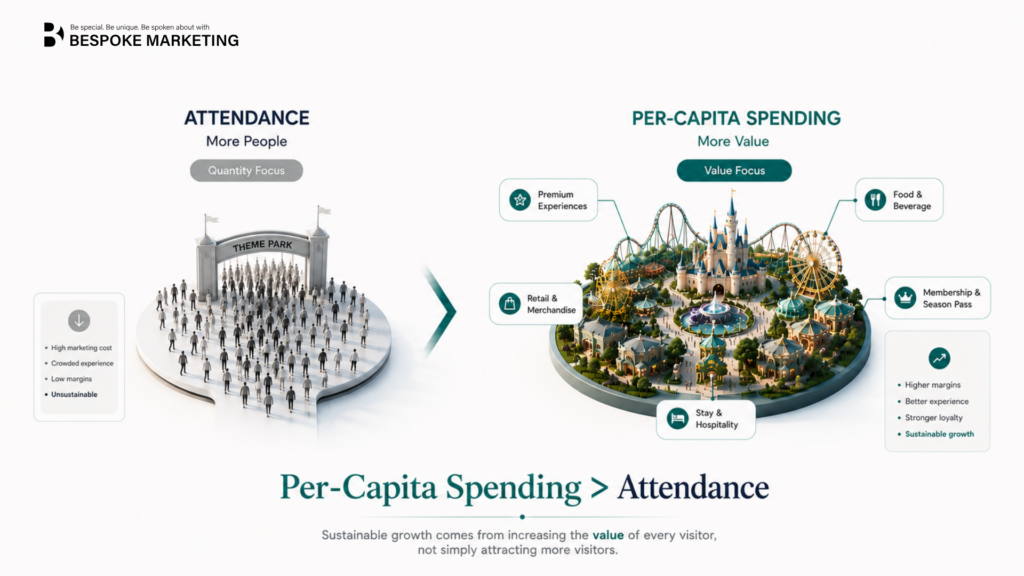
Among the world’s leading theme park operators, finance and management teams are placing greater emphasis on per-capita spending – the average amount each guest spends during a single visit.
Unlike attendance, which only measures how many people enter the park, per – capita spending provides a deeper understanding of business performance. It reflects how effectively a park engages its guests, encourages additional purchases, and creates an experience that motivates visitors to spend throughout their journey.
Rather than relying solely on attracting new customers, successful operators focus on increasing the value of every existing guest. This approach enables revenue growth even when attendance remains relatively unchanged.
Recent performance across major global entertainment companies illustrates this trend clearly. While domestic attendance has shown limited growth, revenue has continued to increase through higher-value ticket offerings, premium products such as fast-lane access and VIP packages, as well as stronger spending on food, beverages, merchandise, and other in-park experiences.
This demonstrates an important change in business strategy. Sustainable growth is no longer determined by the number of people entering the park – it is determined by how effectively the park maximizes the value of each visit.
The Four Revenue Layers of a Mature Theme Park
A closer look at the world’s leading theme parks reveals a common business model built around four complementary revenue layers.
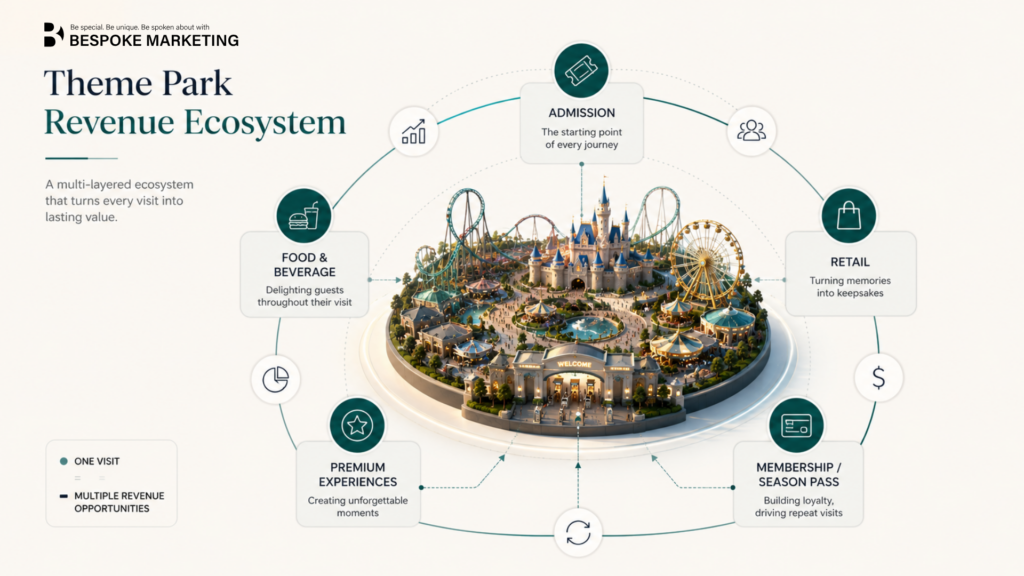
1. Admission
Admission remains the foundation of the business. Every customer journey begins with purchasing a ticket, making admission the first and most essential source of revenue.
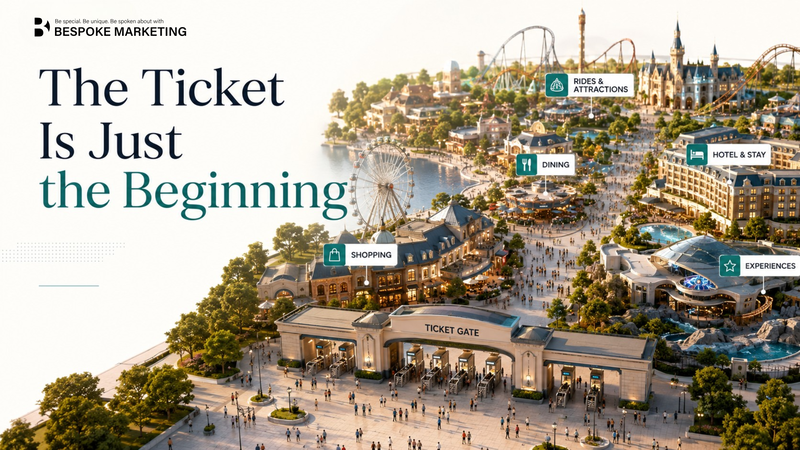
However, for mature operators, ticket sales are increasingly viewed as the starting point rather than the final objective. Admission opens the door to a broader ecosystem of experiences that generate additional value throughout the guest journey.
2. Food & Beverage and Retail
Food, beverages, and retail have become one of the fastest-growing revenue streams within the industry.
Unlike admission tickets, these purchases are largely influenced by guest experience. Attractive dining options, themed restaurants, exclusive merchandise, and convenient retail locations encourage visitors to spend naturally during their stay.
As parks become more immersive, these secondary purchases play an increasingly important role in overall business performance.
3. Premium Experiences
Premium products – including priority access, VIP services, exclusive events, and limited-capacity experiences – represent another important revenue layer.
These offerings typically deliver attractive profit margins because they increase the value of the experience without requiring significant expansion of physical infrastructure. By creating differentiated experiences for guests seeking greater convenience or exclusivity, operators can generate additional revenue while enhancing customer satisfaction.
4. Memberships and Season Passes
Membership and season pass programmes transform one-time transactions into long-term customer relationships.
Beyond creating recurring revenue, these programmes provide valuable customer data and behavioural insights that help operators better understand visitor preferences, improve personalisation, and strengthen long-term loyalty.
As competition continues to increase, recurring relationships become a significant strategic advantage over relying solely on one-time ticket sales.
Across many developing markets, including Vietnam, most theme parks continue to generate the majority of their revenue from admission tickets and, to some extent, food and beverage services. However, the greatest opportunity for improving profitability lies within the third and fourth revenue layers. Developing premium experiences and membership ecosystems often requires less investment in physical expansion and more focus on experience design, storytelling, branding, and customer engagement.
Why This Matters for Decision Makers
The way a theme park measures success ultimately shapes the way it invests.
If attendance remains the primary performance indicator, management decisions will naturally prioritise customer acquisition through advertising campaigns, ticket promotions, and new attractions designed to increase visitor numbers.
However, when revenue per guest becomes the key metric, the strategic conversation changes entirely.
How can visitors stay longer?
How can they enjoy more experiences?
How can they spend more willingly?
How can they be encouraged to return more frequently?
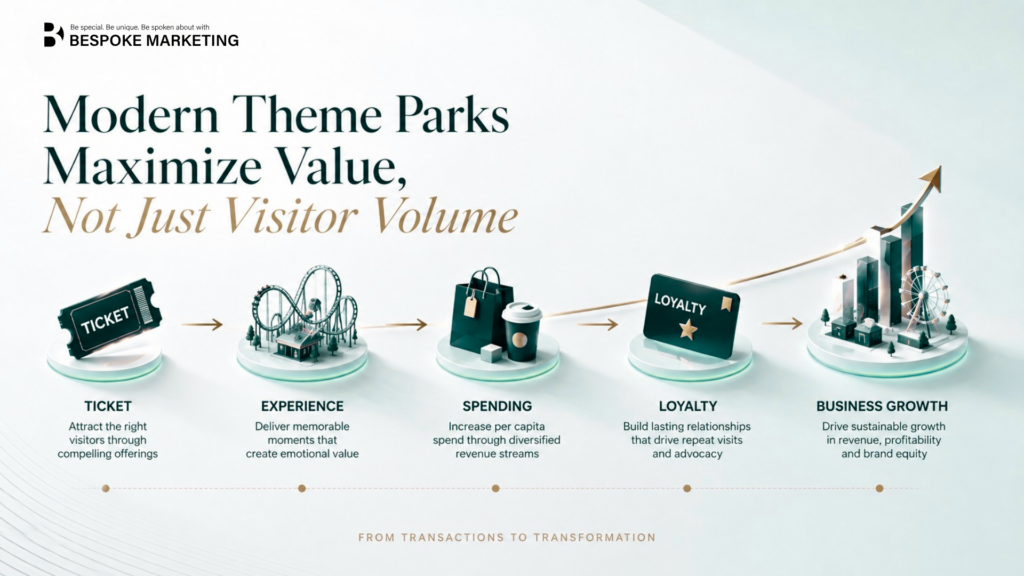
These are no longer operational questions – they are strategic business questions that influence long-term profitability and sustainable growth.
Ultimately, the world’s most successful theme parks are not simply those that welcome the highest number of visitors. They are the ones that maximize the value of every guest by building a diversified, multi-layer revenue model. In today’s increasingly competitive entertainment landscape, the ticket is no longer the destination-it is only the beginning of the customer journey