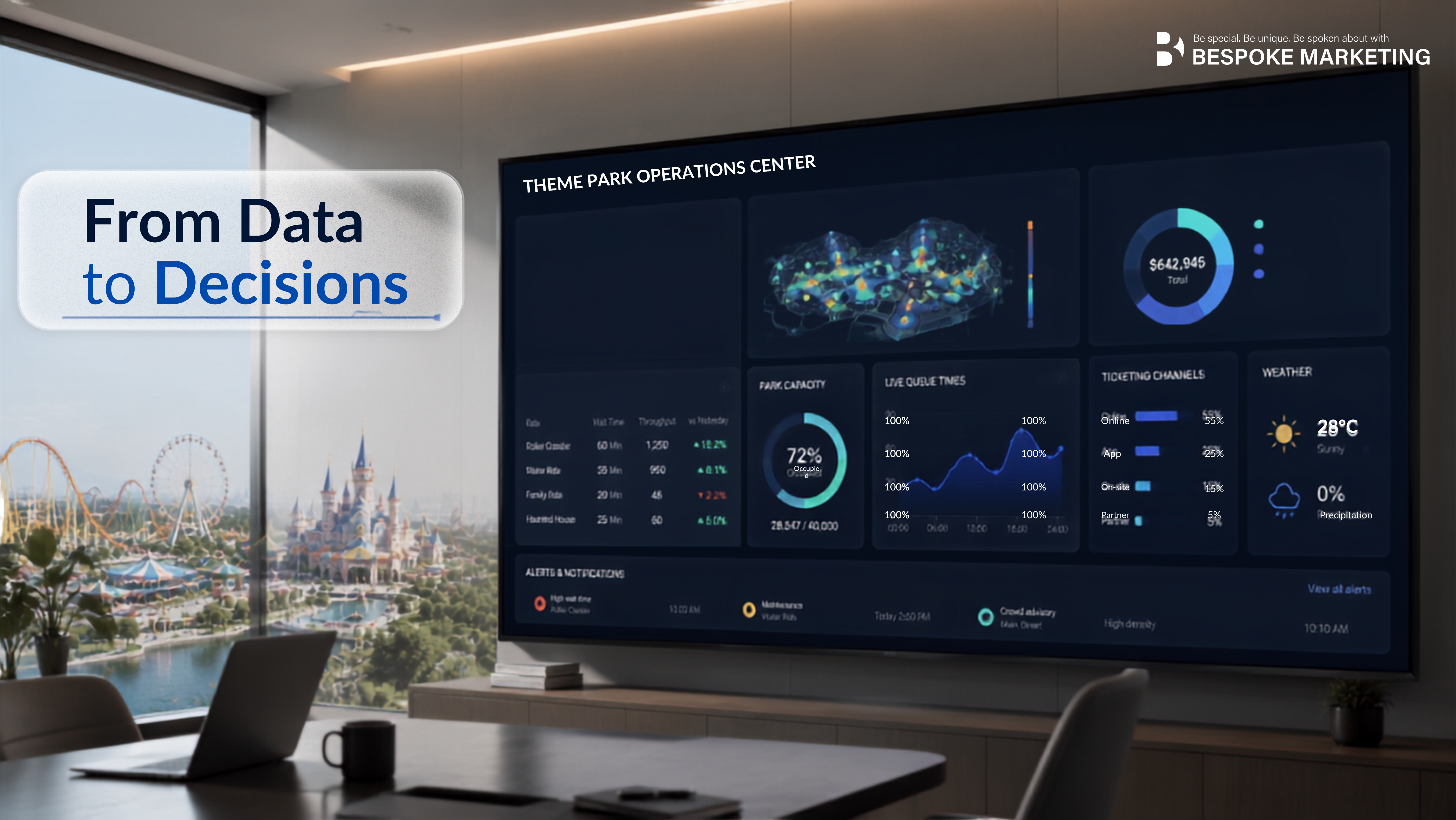
For many years, digital transformation in the theme park industry was primarily associated with operational efficiency. Investments were often directed toward replacing paper tickets with e-tickets, introducing cashless payments, or implementing digital queue management systems to improve convenience.
While these initiatives undoubtedly improved day-to-day operations, they represent only one part of the broader transformation taking place across the industry.
Today, leading theme park operators are redefining the role of digital transformation. Rather than viewing technology as an operational expense or an IT project, they increasingly regard it as the business infrastructure that enables long-term growth, operational intelligence, and customer-centric decision-making.
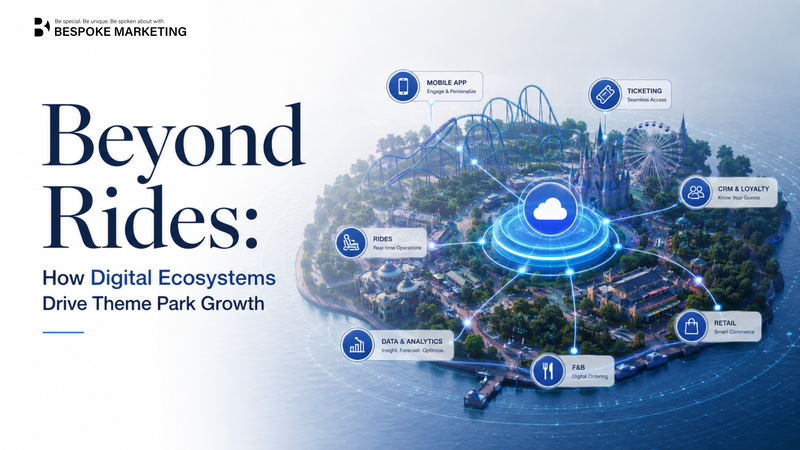
The conversation has shifted from digitising individual processes to building connected ecosystems that support every stage of the customer journey.
Digital Transformation Goes Beyond Technology
A modern theme park generates thousands of customer interactions every day-from ticket purchases and entry records to attraction usage, food and beverage transactions, retail purchases, membership activities, and customer feedback.
When these touchpoints operate independently, valuable information remains fragmented across multiple systems. Teams work with disconnected data, making it difficult to gain a complete understanding of visitor behaviour or make informed business decisions.
Digital transformation addresses this challenge by connecting these operational touchpoints into a unified ecosystem where information flows seamlessly across departments.
Instead of managing isolated systems, operators gain a comprehensive view of both business performance and customer behaviour, enabling faster decisions and more efficient operations.
Building an Integrated Digital Ecosystem
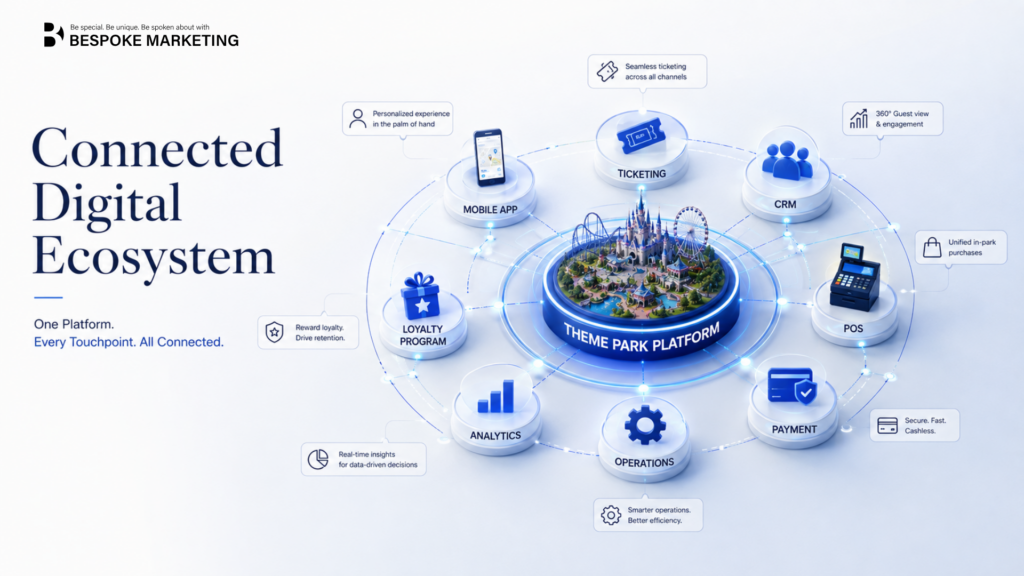
Successful digital transformation is not achieved by implementing a single technology. It requires an integrated ecosystem where multiple business functions work together.
At the operational level, digital platforms help streamline ticketing, access control, payment processing, workforce management, maintenance scheduling, and day-to-day park operations. This improves efficiency while reducing manual processes and operational risks.
At the customer level, digital solutions create a smoother and more personalised visitor experience. Mobile applications, membership programmes, digital payments, online reservations, and customer service platforms enable guests to interact with the park more conveniently before, during, and after their visit.
Perhaps most importantly, every interaction generates valuable data. When integrated into a central platform, these insights help operators understand visitor preferences, identify behavioural patterns, and support more informed business planning.
Rather than functioning as separate technologies, these systems become part of a single digital infrastructure that supports both operational excellence and long-term growth.
Data Is Becoming a Strategic Business Asset
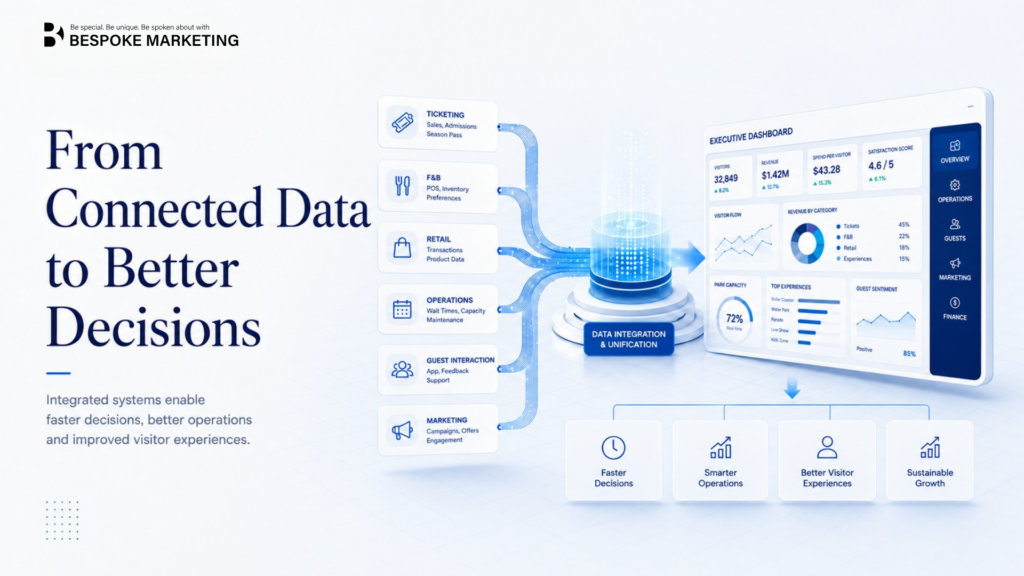
One of the most valuable outcomes of digital transformation is not the technology itself, but the data it creates.
Every customer interaction provides an opportunity to better understand visitor behaviour. Information such as purchase history, attraction preferences, visit frequency, seasonal trends, and spending patterns helps management teams make more confident strategic decisions.
Instead of relying solely on historical reports or assumptions, operators can increasingly use real-time information to optimize pricing strategies, improve operational planning, personalise marketing activities, and enhance the overall visitor experience.
As customer expectations continue to evolve, data is becoming one of the industry’s most important competitive advantages.
Why Digital Transformation Is a Business Investment
Many organisations still evaluate digital transformation primarily through implementation costs.
However, leading operators increasingly measure its value through business outcomes.
A well-connected digital ecosystem improves operational efficiency, strengthens customer engagement, enables data-driven decision-making, and supports long-term revenue growth. More importantly, it creates the foundation for future innovation as customer expectations and business models continue to evolve.
Digital transformation should therefore be viewed not simply as an IT initiative, but as critical business infrastructure.
For decision makers, the strategic question is no longer whether to invest in digital transformation. The real question is how to build an integrated ecosystem that connects operations, customers, and data into a sustainable platform for future growth.
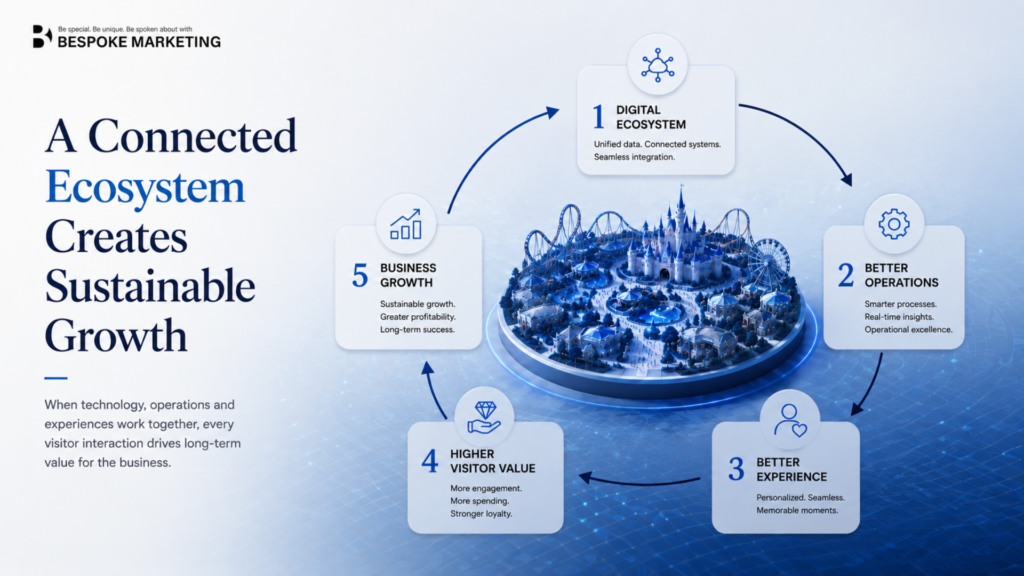
In an increasingly competitive entertainment industry, technology alone does not create competitive advantage. A connected digital ecosystem that transforms information into better business decisions does.