In dermocosmetics, being discovered is no longer enough.
As we explored in our previous articles, consumers increasingly enter the category through specific skin concerns and active ingredients. They then evaluate whether a product has enough scientific evidence to earn their trust.
But even when consumers understand the science and believe the claims, another question remains:
Who can help them decide what to use, how to use it, and whether it is right for them?
This is where the role of advocacy is changing.
Generic influencer seeding, one-off expert endorsements, and discount-driven livestreams are becoming less effective ways to convert increasingly educated skincare consumers. The opportunity is to build a connected ecosystem where peers create relevance, medical experts provide authority, and social commerce turns that trust into action.
1. Your consumers need advocates, not just influencers
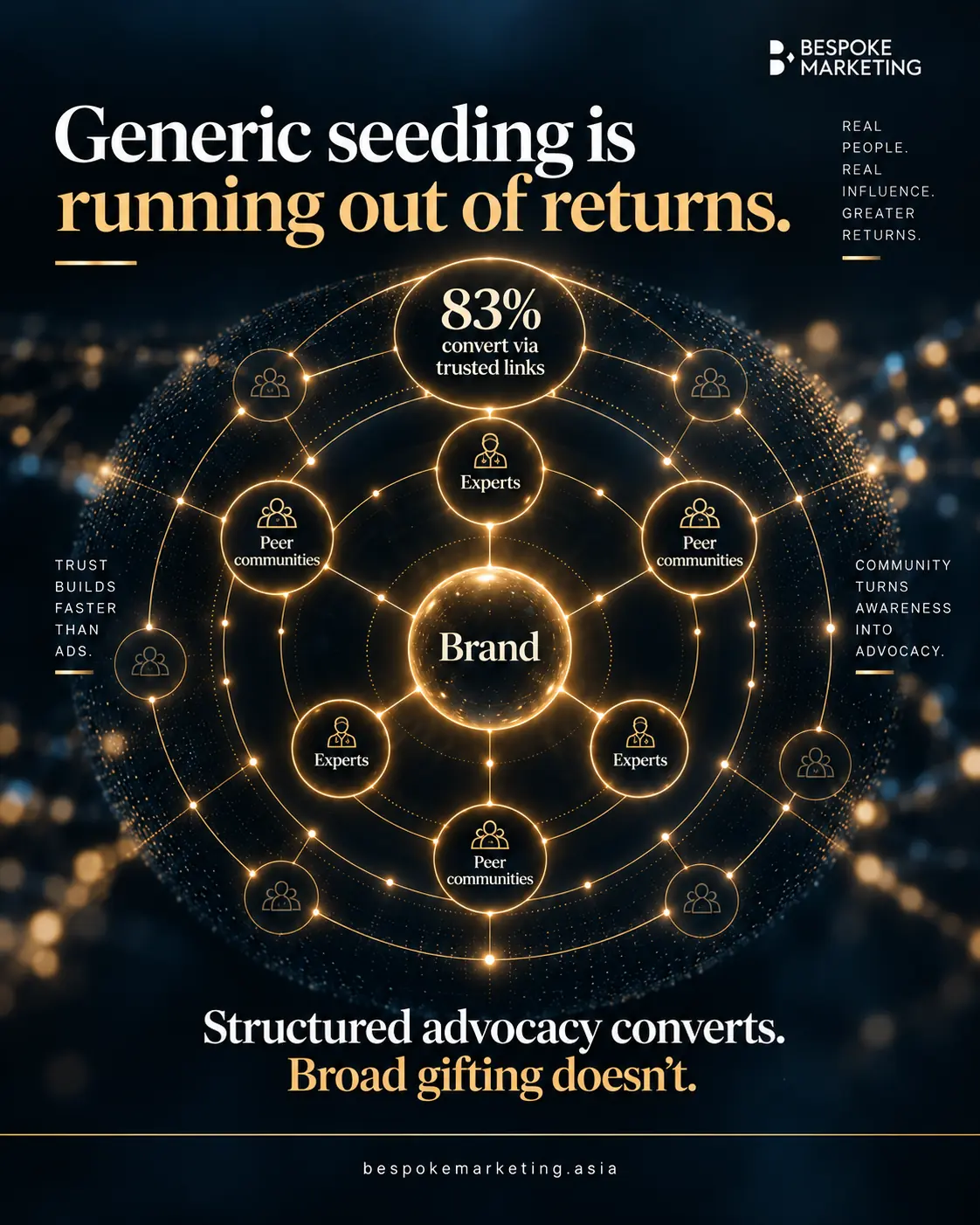
Generic influencer seeding is delivering diminishing returns against educated skincare consumers.
BCG data reveals that high-intent skincare buyers actively cross-verify product claims within peer communities and ingredient-focused forums before committing to a purchase. Meanwhile, TikTok Shop platform research shows that 83% of Vietnamese buyers convert directly through trusted creator links when authentic product validation is present.
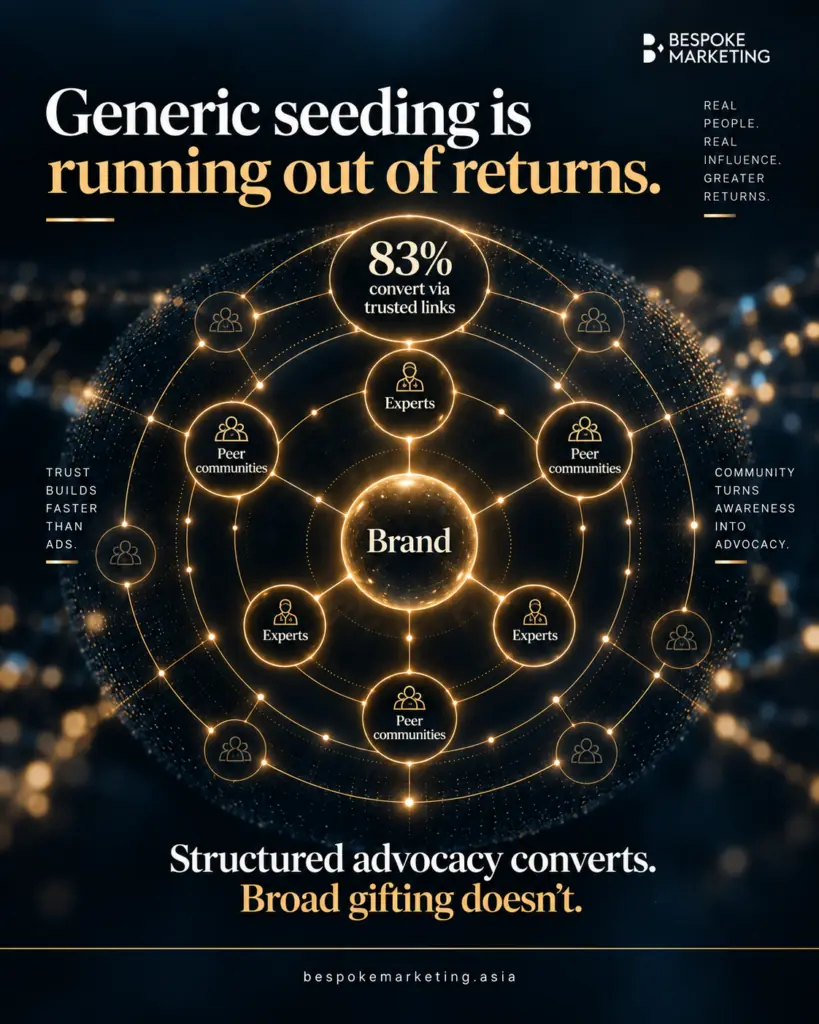
This signals an important shift.
Consumers are looking for validation from people whose experience, knowledge, or perspective they can trust.
Relying on surface-level gifting and broad lifestyle endorsements can increase visibility, but may do little to build the confidence required for a considered skincare purchase.
Long-term category leaders therefore need to move beyond one-off influencer activation and build structured advocacy networks that help consumers understand product science, formulation usage, and long-term skin health.
The role of creators is not simply to generate impressions.
It is to help make scientific and product information relevant, relatable, and actionable within real consumer conversations.
And while peer voices can make a product relatable, some questions require a different level of authority.
What should I use? How should I combine these actives? And can I trust this regimen for my skin?
This is where medical expertise becomes critical.
2. Medical experts should be partners across the funnel, not one-off endorsers
Treating dermatologists and pharmacists as one-off endorsement channels wastes their highest commercial value.
BCG emphasizes the growing continuity between professional medical advice and daily home treatment regimens. Consumers are increasingly looking for guided regimens, not generic product placements.
That changes the role of healthcare professionals within the consumer journey.
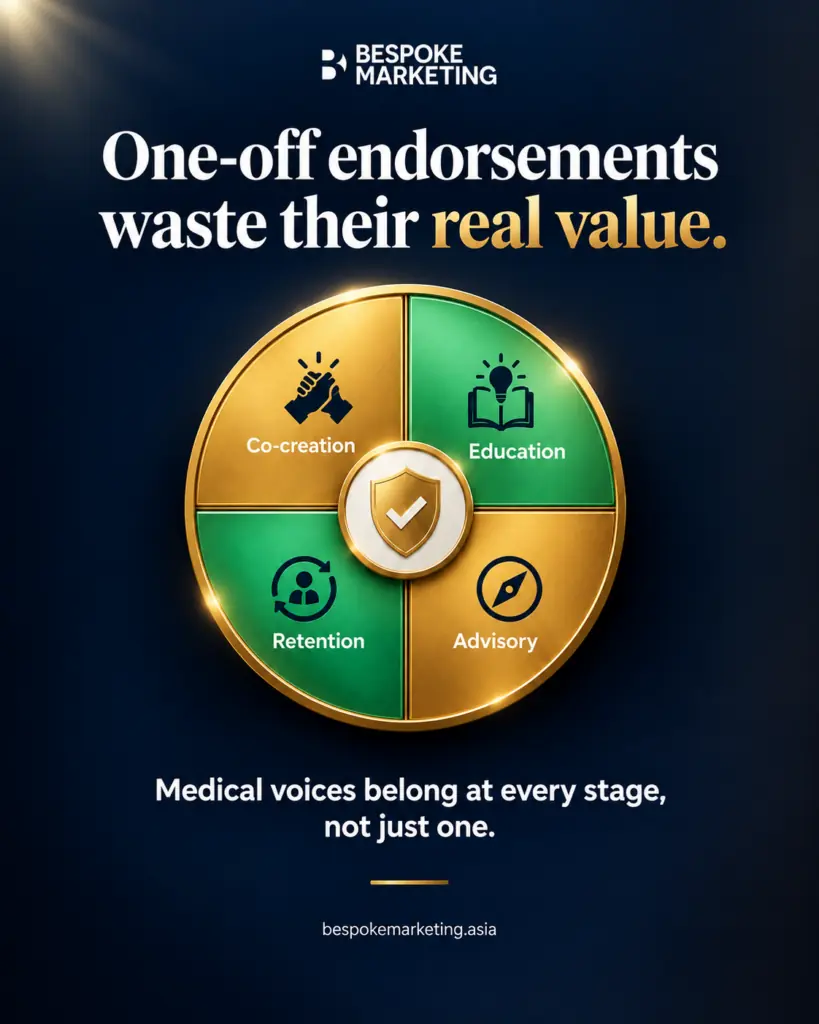
Instead of appearing only at the point of product endorsement, medical professionals can contribute across multiple stages:
Message co-creation → Consumer education → Regimen guidance → Product consideration → Ongoing advisory
At the top of the funnel, their expertise can help brands build scientifically grounded communication. Further down the journey, expert-led education can help consumers understand how products fit into a broader skincare regimen.
Deploying healthcare professionals across these touchpoints can systematically strengthen buyer confidence and increase basket size.
The objective is therefore not simply to put a dermatologist in front of a camera.
It is to build a medical partnership system where clinical expertise continuously reinforces the consumer journey.
And once consumers have received both peer validation and professional guidance, the final challenge is turning that trust into a purchase experience.
3. Social commerce should become a place for advice, not just transactions
Fast-talking, discount-driven livestreams rarely attract high-ticket skincare buyers.
Analysis from TikTok Shop shows hero daily categories such as sunscreen capturing 447.8 billion VND in a 30-day window, driven by regimen education and official-store authenticity rather than flash sales.
At the same time, 83% of shoppers use the platform to discover new solutions. This means social commerce is increasingly becoming part of the discovery and consideration journey, rather than simply the final transaction point.
For high-performance skincare, consumers often need more than a discount before they purchase. They need help understanding which solution fits their concern, how to use it, and how different products work together.
Treating social commerce as an aggressive clearance channel can therefore suppress average order value and attract low-retention shoppers.
A stronger model is to transform livestreams into expert-led advisory streams, where education, diagnosis, regimen guidance, product demonstration, and commerce work together.
The livestream becomes more than a place to sell a product.
It becomes a place where consumers can ask questions, receive guidance, understand the role of each product, and build a multi-product regimen with greater confidence.
From Trust to Advocacy to Conversion
Discovery creates attention. Scientific proof creates credibility. Advocacy helps consumers act on that credibility.
The opportunity for dermocosmetics brands is to connect these stages into one continuous system:
Peer Advocacy → Medical Authority → Regimen Guidance → Social Commerce → Repeat Purchase
Each layer has a distinct role.
Peers make the product relatable.
Medical experts make the information credible.
Advisory-led commerce makes the decision actionable.
When these layers work together, brands can move beyond one-off influencer campaigns and transactional livestreams toward an ecosystem that continuously builds trust, drives conversion, and supports retention.
The goal is not simply to have more people talking about your product.
It is to build a system where the right people help consumers discover, understand, trust, and ultimately stay with your brand.
We help dermocosmetics brands build structured expert and peer advocacy ecosystems, from medical partnerships and creator networks to expert-led social commerce, turning product science into sustained commercial growth.
Build trust that converts. Build advocacy that lasts.